

Urinary Incontinence — It’s Not Normal. It’s Not Inevitable. And It’s Treatable.
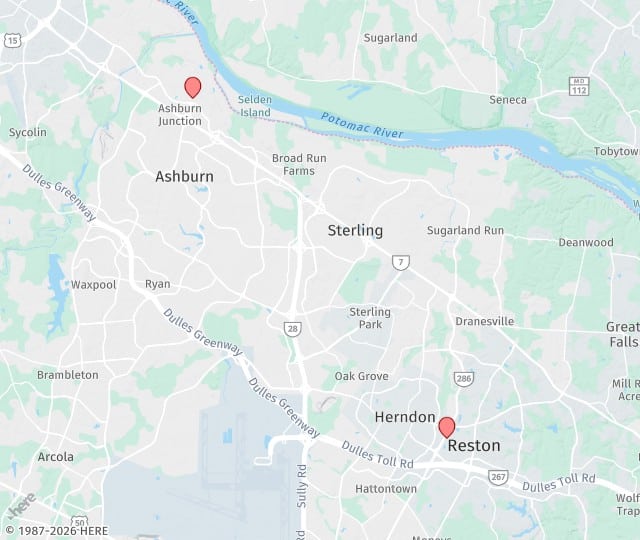
Non-invasive, physician-supervised treatment for urinary incontinence using FDA-cleared Emsella technology — at our Lansdowne and Reston locations.
If you plan your day around bathroom locations, avoid laughing too hard, skip workouts because of leaking, or wake multiple times a night with an urgent need to urinate — you are not alone. Urinary incontinence affects over 33 million Americans, yet the majority never seek treatment because they’ve been told it’s a normal part of aging, an inevitable consequence of childbirth, or simply something to manage with pads and lifestyle adjustments.
Understanding Urinary Incontinence
Urinary incontinence is not a single condition. It presents in several distinct forms, each with a specific underlying mechanism — and understanding which type you have is the foundation of effective treatment.
Stress incontinence is the most common type, particularly in women. It occurs when physical exertion — coughing, sneezing, laughing, lifting, jumping, or exercising — places sudden pressure on the bladder that a weakened pelvic floor can no longer withstand. The result is involuntary leakage that has nothing to do with actually needing to urinate. It is a structural problem caused by muscle weakness, and it responds directly to treatments that rebuild that strength.
Urge incontinence — often called overactive bladder — is characterized by a sudden, intense urge to urinate that arrives with little warning and is difficult or impossible to suppress. Patients with urge incontinence often find themselves rushing to the bathroom multiple times per day and night, frequently not making it in time. The underlying cause is a combination of overactive bladder muscle contractions and impaired neuromuscular coordination — both of which respond well to pelvic floor rehabilitation.
It is none of those things. It is a medical condition with a medical cause — and at VPMC, it has a medical solution.
Mixed incontinence combines stress and urge symptoms and is particularly common in postmenopausal women, where declining estrogen levels weaken both the pelvic floor muscles and the urethral tissue simultaneously. Managing mixed incontinence requires addressing both mechanisms — not just one.
Functional incontinence occurs when a person has the physical urge to urinate but cannot reach the bathroom in time due to mobility limitations, cognitive impairment, or physical barriers. This is particularly relevant in our geriatric patient population, where strengthening the pelvic floor and improving overall mobility work together to restore continence.
Why Emsella Is the Treatment That Changes Everything
Traditional treatment for urinary incontinence has relied on Kegel exercises, bladder training, medication, and — in more severe cases — surgery. Each has significant limitations. Kegel exercises require patients to correctly identify and isolate the pelvic floor muscles, perform them consistently and with sufficient intensity, and sustain that practice over months. Studies show that up to 50% of patients perform Kegels incorrectly, and the vast majority cannot generate contractions with enough strength or frequency to produce meaningful clinical improvement. Medications for overactive bladder carry side effects including dry mouth, constipation, blurred vision, and — particularly concerning in older adults — cognitive impairment. Surgery carries the risks inherent in any invasive procedure and is not appropriate for many patients.
Emsella bypasses every one of these limitations.
Emsella is an FDA-cleared, non-invasive pelvic floor rehabilitation technology that uses High-Intensity Focused Electromagnetic energy to induce approximately 11,200 supramaximal pelvic floor contractions in a single 30-minute session. You sit fully clothed in the Emsella chair — no undressing, no preparation, no discomfort beyond the sensation of intense muscle contractions — while the technology does precisely what Kegel exercises attempt but rarely achieve: systematically rebuilding the strength, tone, endurance, and neuromuscular coordination of the entire pelvic floor musculature.
What the Clinical Evidence Shows
The contractions produced by Emsella are supramaximal — meaning they exceed what any voluntary effort can generate. This is clinically significant because pelvic floor rehabilitation requires not just muscle activation but muscle overload — the same principle that makes strength training effective. Emsella delivers that overload consistently, precisely, and without requiring anything from the patient beyond showing up and sitting down.
Independent clinical studies of Emsella have demonstrated that 95% of patients report a significant improvement in quality of life, 75% of patients report a significant reduction in the use of incontinence pads, and the majority of patients experience meaningful symptom improvement within the standard six-session treatment protocol. Results develop progressively — many patients notice improvement after the second or third session — and continue improving for weeks after the final treatment as neuromuscular re-education continues.
What to Expect at VPMC
Your incontinence care at VPMC begins with a thorough clinical evaluation — a detailed review of your symptoms, medical history, medication list, and relevant factors including hormonal status, chronic conditions, and previous treatments. We assess which type of incontinence you have, identify any contributing factors that need to be addressed alongside Emsella treatment, and create a personalized treatment plan.
A standard Emsella protocol consists of six sessions scheduled twice per week over three weeks. Each session is 30 minutes. There is no preparation required, no recovery period, and no downtime — most patients return to normal activities immediately. Sessions are comfortable enough that many patients read or use their phone during treatment.
Follow-up assessment after your course of treatment evaluates your response and determines whether maintenance sessions are appropriate for long-term results. For patients whose incontinence is connected to menopause and hormonal decline, Emsella is often combined with bioidentical hormone pellet therapy — addressing both the structural weakness and the hormonal environment that drives it — for outcomes that neither treatment produces alone.
Who Benefits From Emsella at VPMC
Women of any age experiencing stress, urge, or mixed incontinence. Women in perimenopause or menopause whose pelvic floor has weakened with declining estrogen. Women recovering from childbirth who want to accelerate pelvic floor rehabilitation. Men experiencing urinary urgency, frequency, or post-prostatectomy incontinence. Seniors who cannot perform traditional pelvic floor exercises due to mobility, cognitive, or physical limitations — for whom Emsella is often the only rehabilitation option that produces real results. Patients in our medical weight loss program, where excess abdominal weight increases bladder pressure — Emsella and weight loss together produce dramatically better outcomes than either approach alone.
The VPMC Difference
Emsella is available at medical spas across Northern Virginia. What is not available at a medical spa is a care team that reviews your complete medication list for drugs contributing to incontinence, evaluates your hormonal status and coordinates treatment accordingly, integrates your pelvic floor rehabilitation with your primary care, weight management, and chronic disease treatment, and provides the clinical oversight that transforms a wellness technology into a genuine medical intervention.
At VPMC, your incontinence treatment is supervised by physicians who know your full health picture. That changes what’s possible.
Why Choose VPMC?

Personalized Care
We understand that every patient is unique. Our dedicated team of internal medicine specialists and experienced doctors takes the time to listen, understand your needs, and develop a personalized care plan that’s right for you.

Comprehensive Services
From preventive care and wellness programs to managing chronic conditions like high blood pressure, diabetes, and heart disease, we offer comprehensive care for adults and adolescents (16+).

Compassionate Approach
We believe that compassion is at the heart of great healthcare. Our team is committed to providing a warm, welcoming, and supportive environment where you feel heard and valued.

Patient Focused
Your well-being is our top priority. We’re committed to providing the highest quality, most cost-effective care, always seeking to create and deliver value for you and your family.
Make an Appointment with our talented team at Virginia Premium Medical Care